


The thing about #AI and writing is like the thing about CDs and vinyl, said my 81 year old cousin, who was raised on records. “A few dangling participles shows your personality. That’s why people are going back to vinyl. We want to hear some of the crackle and reality. You don’t get that with all digital,” he explained.
He has a great point (and Neil Young would approve. For more on the value of trad listening, catch this story from #CBSSundayMorning : “Reclaiming the lost art of listening to music”).
Perfection is like the ubiquitous em-dash. It may be grammatically correct but no human is always that perfect.
So, how do we find “the human in the machine,” as Baratunde Thurston, one of my recent “Insider Interviews” podcast guests, puts it? Baratunde made this distinction: AI can be a terrific assistant, but it shouldn’t become the author. Let it organize your thoughts, challenge your thinking, or help with research. The perspective still has to be yours.
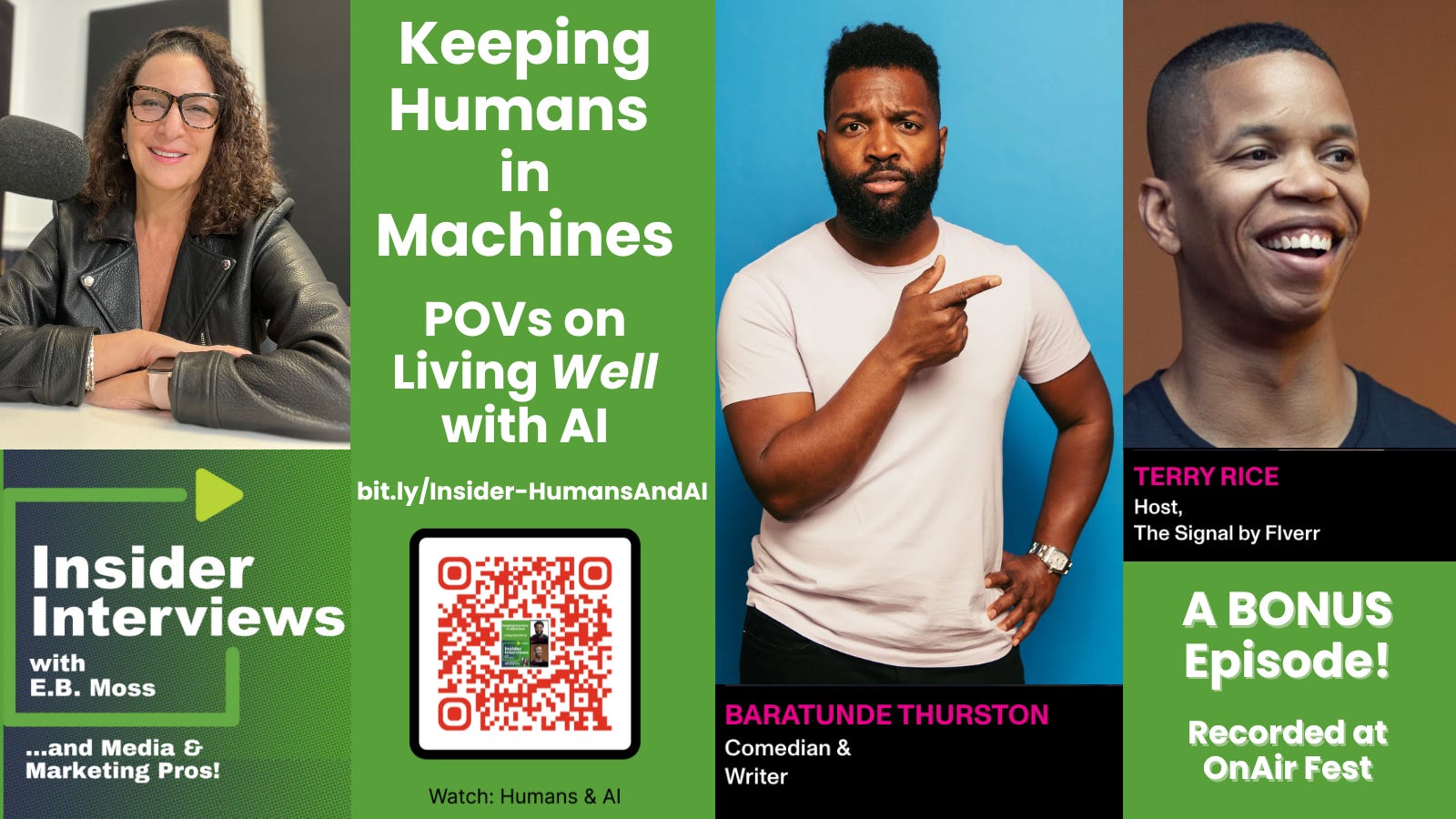
Baratunde also admitted that there’s something “slower and messier” about creating things yourself. To that exact point, all this is original, but I did ask my friend Chat to summarize a bit of that podcast episode to help me find and encapsulate the points. That saved me tons of time, but if a brain is like a muscle would it have been better off doing the legwork? (And if Chat had written that last line would it have mixed as many metaphors in one sentence as I just did?)
I do find I’m a little addicted to having Chat as a launchpad; it’s like the starter pistol that gets me going. Am I fooling myself that that’s okay, since I’m a good “prompter and re-prompter”?
That same episode featured a second guest who justified the AI habit a bit: Terry Rice, Ted-talker and strategist, acknowledged that the future’s skill isn’t writing every word yourself. It’s “having the judgement to know what’s good, what’s generic and what’s YOU.”
But then (relying on my other bad habit of relying on cliches) there’s the problem of an “embarrassment of riches.” Or worse, a “Sophie’s Choice” of choosing from among the AI-suggested options. How do I sort out which is the best of the best of the LLM phrases, and which I should let go of? (Note: stranded preposition in that sentence.)
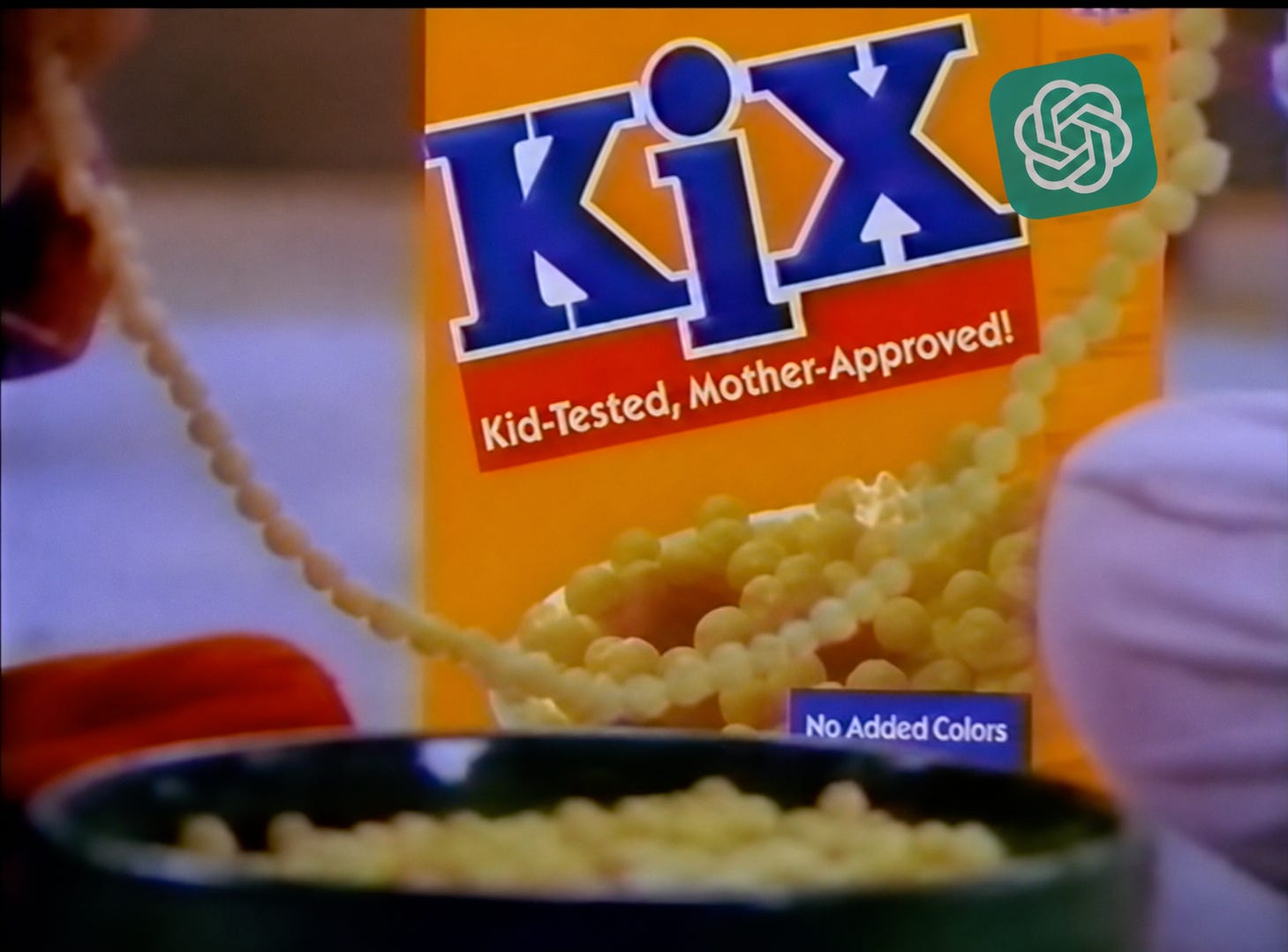
Do I believe Chat or Claude when they tell me, “This is the one I like.” Can an LLM LIKE a result? And why DO I buy into it when I get that feedback? It’s like the old Kix commercial slogan, “Kid-tested; Mother-approved.” Only I’m the kid and Mom is Claude? OMG. Do I yearn for approval, or is AI the best arbiter of taste and effectiveness? It’s a quandary.
Terry quoted his 10-year-old daughter’s simple but sagacious observation: “It’s okay to fight with AI.”
Don’t accept the first draft. Push back. Ask for another version. Keep editing until it sounds like something you’d actually say.
So, the lesson is just to trust your gut as the differentiator. Then do proof, but also add your personal touch—your thumbprint, if you will…even if that means you leave an em-dash, a little crackle or a mixed metaphor.
Apropos my post just visited a famous record store in London dedicated to vinyl! #RoughTrade