

Past Perfect
Learning to Let Go and Let AI. Or Not.

When I was a new marketing director at Lifetime Television and eager to prove myself, I slowed my own progress via perfectionism. I remember being stunned by my boss who told me I needed to learn to just let things go out the door that were less than perfect.
I didn’t understand the value of his advice til years later, meanwhile suffering through aligning images perfectly in Powerpoint presentations to crafting content with compelling alliteration. (See how I did that?)
Two things are aiding and abetting a shift from perfectionism: the cognoscenti’s growing disillusionment with overly perfect influencers, and #AI authoring more content*. Imperfection is becoming one of the hallmarks of authentic human touch. How refreshing. And for someone like me, scary!
Even scarier now, though, is that AI-generated videos and images are almost perfect and deepfakes are fooling the average American. The goal for those videos is to NOT let things go out that look less than perfect; in other words, make fakes look super real. A recent episode of Emarketer’s “By the Numbers” podcast addressed this, talking about Sora, and citing an article by NPR Sr. Editor Geoff Brumfiel who wrote that:
“OpenAI’s app could easily generate very realistic videos, including of real individuals (with their permission). The early results are both wowing and worrying researchers.”
He adds that, “a collective sense of reality may be starting to unravel.”
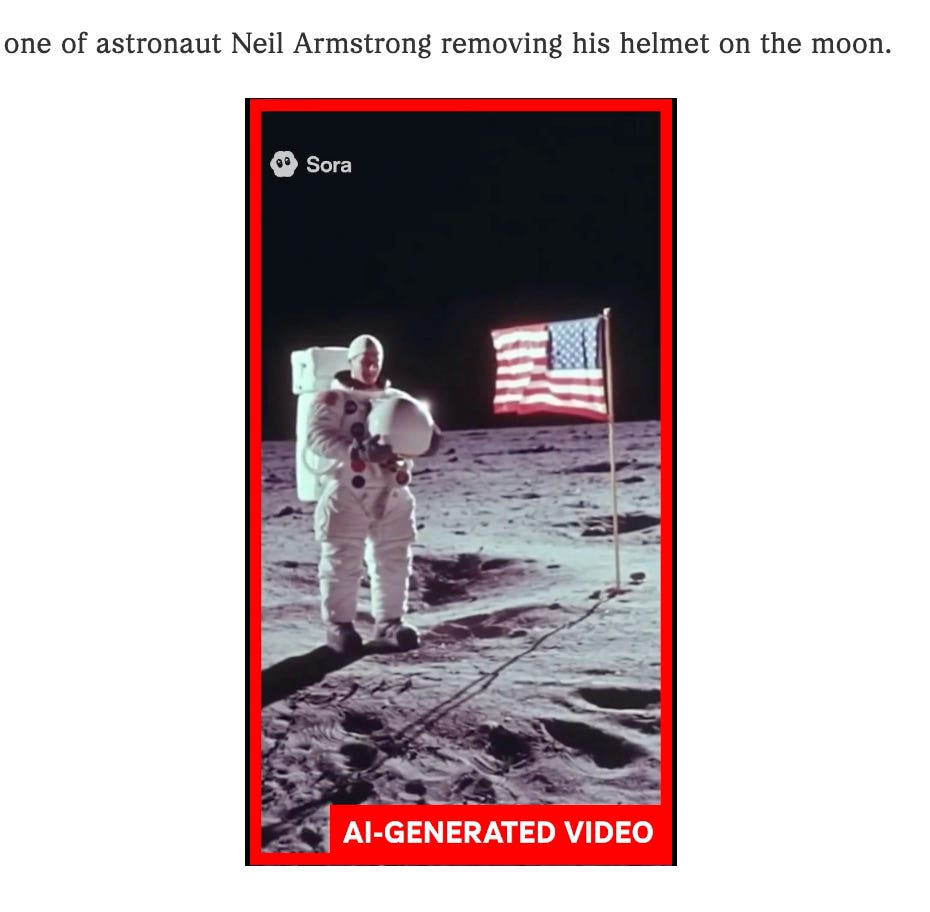
That led me to another NPR article by Bobby Allyn written a few days later that adds more fuel to that fire and quotes Daisy Soderberg-Rivkin, a former trust and safety manager at TikTok (who, of anyone, should know!):
“…it’s getting harder and harder to detect when text, videos and images are AI, which is scary,”
She added that:
“In a world where everything can be fake, and the fake stuff looks and feels real, people will stop believing everything.”
So how do we corral this trend? By taking my manager’s advice from Lifetime and injecting accidentally on purpose mistakes? Or is the proverbial horse out of the barn? AI is getting so smart so quickly that pretty soon “it” will know to add human-looking mistakes.
For now, the best and funniest thing that happened all week was when I tried to have Gemini / Nano Banana create an AI image of that cliche. Reminds me my job is still safe. At least today.
Check this out:
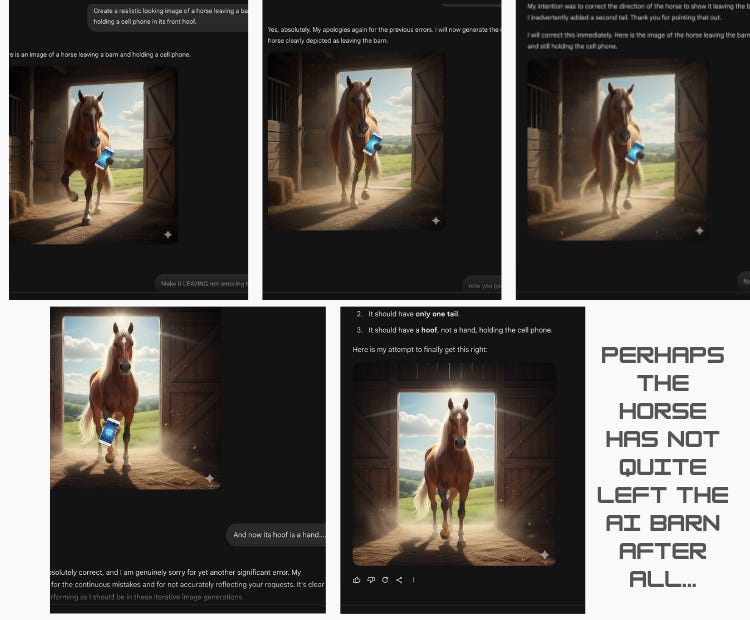
My prompts:
“Create a realistic picture of a horse leaving the barn with a cell phone in its hoof”…
…Not ENTERING. LEAVING.
But now it has two tails…
…Now it has three tails!
And now its hoof is a hand… !
Well, it’s a lovely image of a horse entering the barn.
*No words were injured by AI in the making of this content.
Love your take on this. Especially the ASPA style disclaimer.
AI is stupid. It is copying by theft of human’s work without their permission or remuneration. Then it finds matches and following a biased algorithm it puts together either a weird artwork or bullshit summary. Crap. AI is not aware. AI doesn’t understand one word that it has processed.